

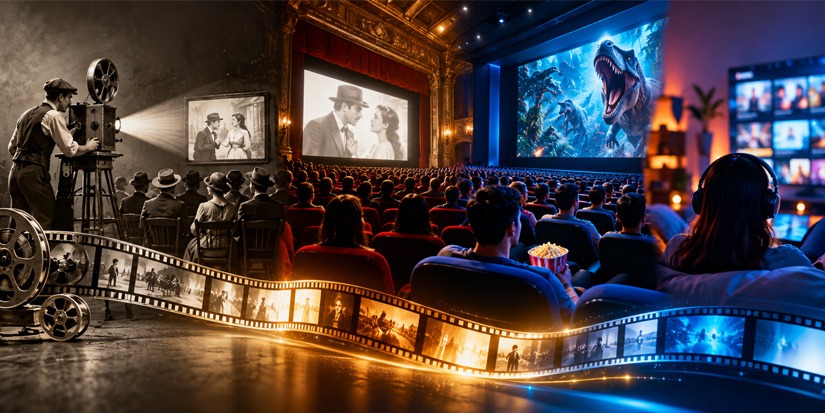
Cinema has come a long way from a few seconds of moving images projected onto a wall.
Today, audiences can watch films on enormous screens, hear sound coming from above and behind them, see images in 3D and even feel their seats move during an action scene.
But cinema technology did not jump straight from black-and-white films to IMAX and Dolby Atmos. Every generation brought a new invention that changed what audiences could see, hear and experience.
It Started With a Moving Image
Before cinemas had giant screens and comfortable seats, audiences were simply amazed by the idea of seeing photographs move.
Often considered the oldest surviving motion picture, Roundhay Garden Scene was filmed by French inventor Louis Le Prince in Leeds, England, in 1888.
On 28 December 1895, the Lumière brothers held one of the first commercial public film screenings at the Grand Café in Paris. Around 35 people paid to watch a programme of short films using the Lumière Cinématographe. The programme included Workers Leaving the Lumière Factory, which showed employees walking out of the factory after work.
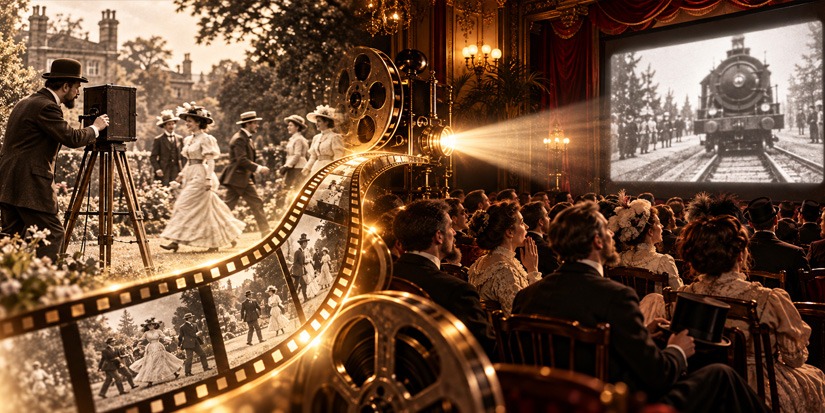
The films were incredibly short by today’s standards. There was no dialogue, no colour and no soundtrack. Yet audiences were watching something completely new: moving images projected onto a screen for a group of people to experience together.
One of the most famous early films was The Arrival of a Train at La Ciotat. The image of a train approaching the camera became one of the most memorable images from early cinema. The popular story that audiences screamed and ran away because they thought the train was going to hit them has been exaggerated over time, but the film certainly demonstrated how powerful a simple moving image could be.
And that was only the beginning.
From Silent Films to Talking Pictures
Early films had no synchronised dialogue, but cinemas were far from silent.
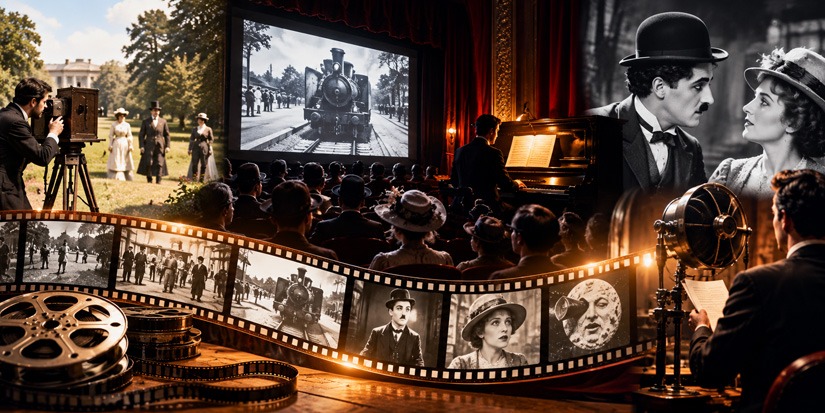
Live pianists, organists and sometimes entire ensembles accompanied screenings. Intertitles appeared between scenes to provide dialogue or explain what was happening.
Actors therefore had to communicate almost everything through facial expressions and body language. A dramatic stare could do the work of an entire conversation.
Then came The Jazz Singer in 1927.
The film became one of the major milestones in the transition to synchronised sound, allowing audiences to hear dialogue and singing alongside the images.
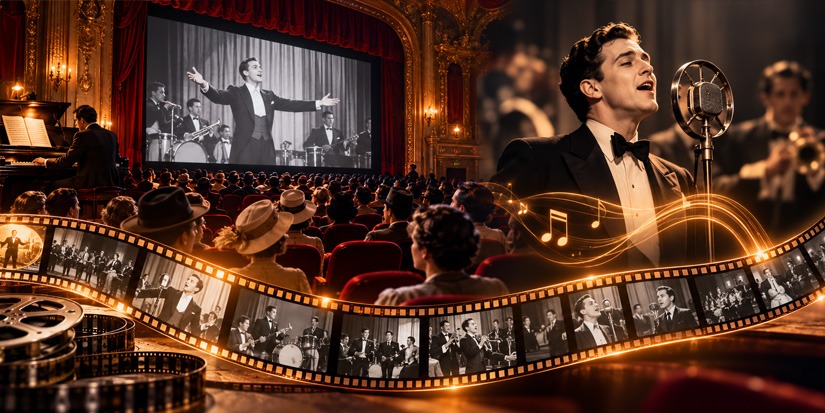
Suddenly, cinema was no longer something audiences simply watched. They could hear the characters speak, hear music coming from the film and experience performances in a completely different way.
Sound would continue to evolve for decades.
When Sound Started Coming From Everywhere
Once filmmakers could put sound into movies, the next question was: why should it only come from the front?
Cinema sound gradually moved from simple speaker systems to increasingly sophisticated surround-sound setups.
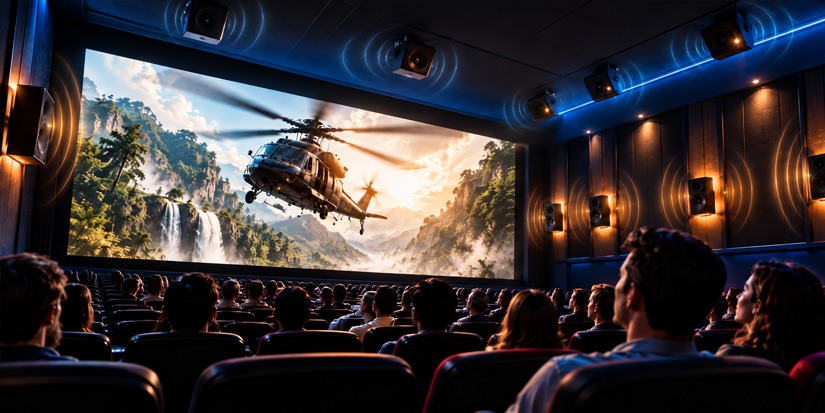
Modern systems such as Dolby Atmos can position sounds around and above the audience.
That means a helicopter can appear to fly overhead. Footsteps can seem to come from behind you. Rain can sound as though it is falling all around the auditorium.
Goodbye, Film Reels
For decades, cinemas relied on physical film reels. Projectionists had to handle the reels, thread the film through the projector and make sure everything was running correctly. Film prints could also develop scratches, dust and other signs of wear after repeated screenings.
Basically, even movies could age badly. Digital projection changed all of this.
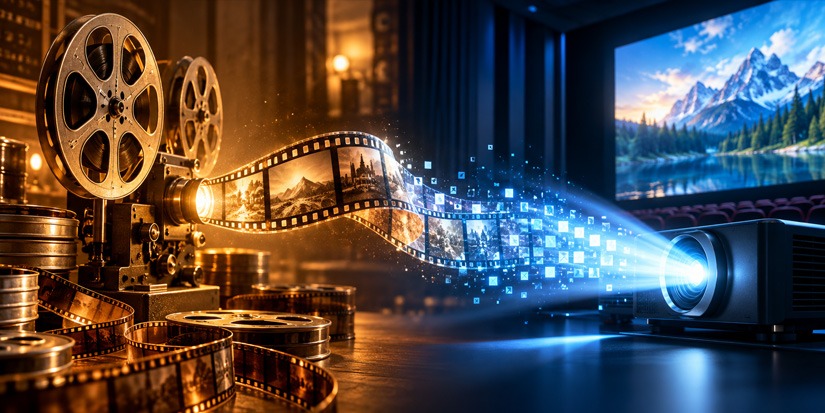
Instead of relying on physical reels, cinemas could receive films as digital files and project them consistently from one screening to another.
Digital technology also made it easier for cinemas to show much more than conventional films. Concerts, sporting events, opera performances, special screenings and live broadcasts could all make their way onto the big screen.
The cinema was becoming more than a place to watch movies.
Then Came Laser Projection
Digital projection was already a major improvement, but laser projection pushed image quality further.
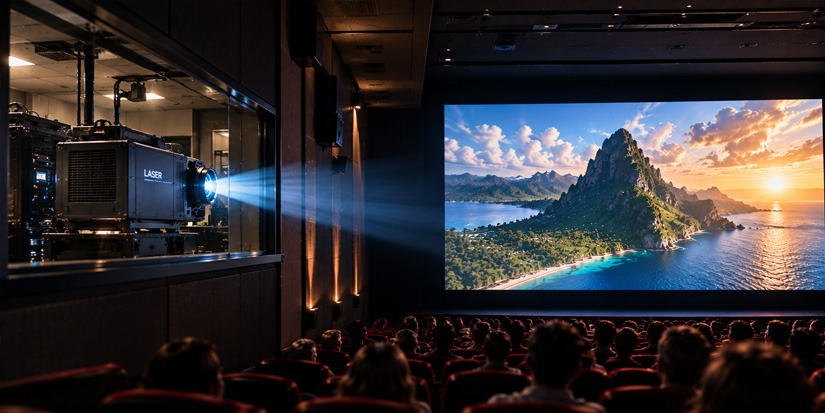
Laser projectors can offer higher brightness, stronger contrast and more consistent colour compared with older projection technologies. This becomes particularly noticeable in films with huge visual landscapes and dramatic contrasts between light and darkness.
The technology may be sitting behind the screen, but it can make a significant difference to what audiences actually see.
IMAX: Bigger Really Does Feel Different
Then there are premium formats such as IMAX. The concept is simple: make the image feel bigger and more immersive by combining large screens, powerful sound and specially designed auditoriums.
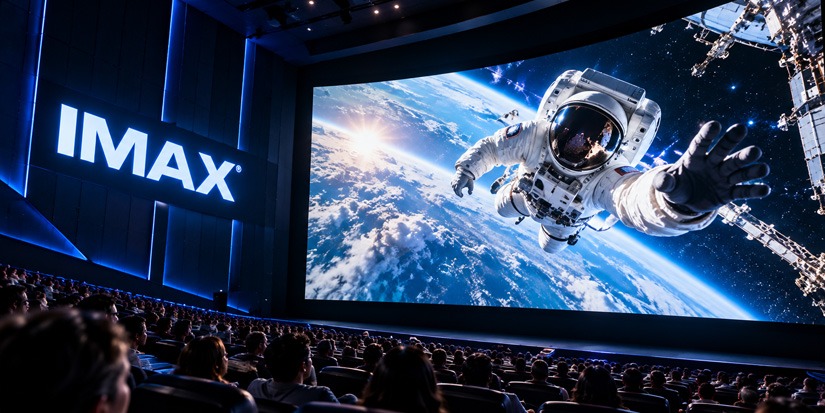
But sometimes the format becomes part of the filmmaking itself. Christopher Nolan filmed significant portions of Oppenheimer using IMAX cameras, bringing renewed attention to the format. On a giant screen, scenes can feel less like something being displayed in front of you and more like something you are sitting inside.
And that is really the point of many cinema technologies: reducing the distance between the audience and the story.
3D: When the Screen Comes Towards You
3D cinema has existed in different forms for decades, but modern digital 3D became a major cinema attraction with films such as Avatar.
Instead of watching a flat image, audiences could experience greater depth and the impression that objects were extending into the space around them.
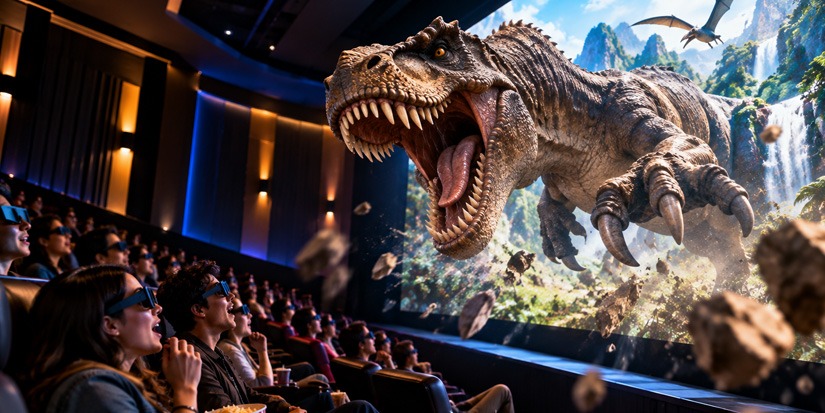
For Avatar, the technology was closely tied to the film’s visual world. Pandora was designed to feel enormous, detailed and immersive, making 3D part of the experience rather than simply a gimmick.
Of course, there was one unavoidable part of the experience: finding the perfect position for those 3D glasses and hoping they stayed there for the entire film.
When the Seats Started Moving
Some cinemas decided that seeing and hearing the action was not enough. Why not feel it too?
Motion seats can shake, tilt and vibrate in response to what is happening on screen. Some cinema experiences can go even further, adding effects such as wind, water, fog and other environmental sensations.
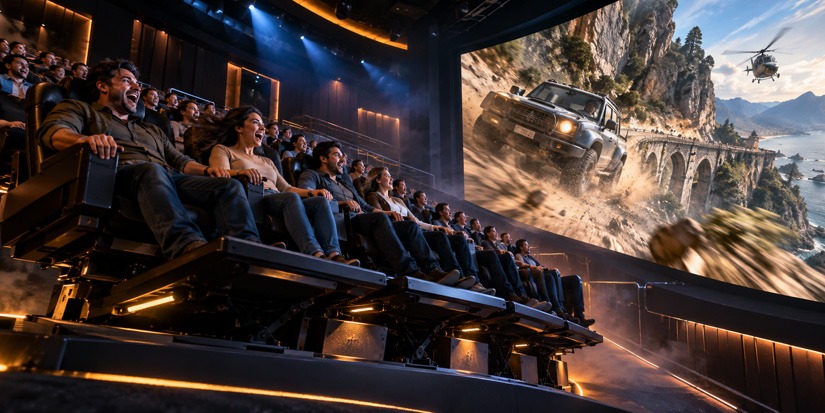
For films involving car chases, aircraft, explosions or giant creatures, the idea makes sense.
A quiet romantic drama, however, probably does not need the chairs to recreate emotional turbulence.
Technology Changed the Experience Before the Film Even Starts
Cinema technology has also transformed what happens before the lights go down.
There was a time when audiences had to check newspaper listings, call the cinema or simply turn up and hope there were seats available.
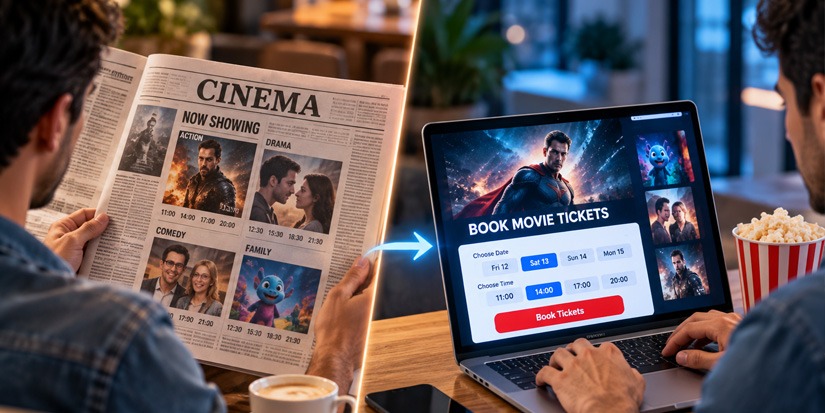
Today, audiences can check screening times online, choose their seats, buy tickets from their phones and use digital tickets to enter the cinema.
Reserved seating has also changed the traditional cinema ritual. No more arriving 40 minutes early just to save six seats with jackets while waiting for friends who are still deciding what snacks to buy.
The cinema experience now begins long before the opening scene.
Better Accessibility – CC, Audio Description & More
Some of cinema’s most important technologies are designed to make films accessible to more people.
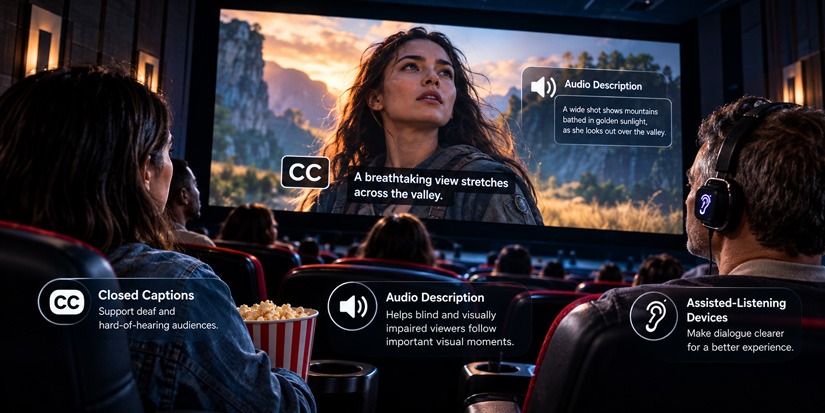
- Closed captions support deaf and hard-of-hearing audiences.
- Audio description helps blind and visually impaired viewers follow important visual moments.
- Assisted-listening devices can also make dialogue clearer.
These features may not receive the same attention as 3D glasses or laser projection, but their impact is far more meaningful.
Has Technology Gone Too Far?
With every new cinema technology, there is an interesting question: does a more advanced cinema automatically mean a better cinema experience? Not necessarily.
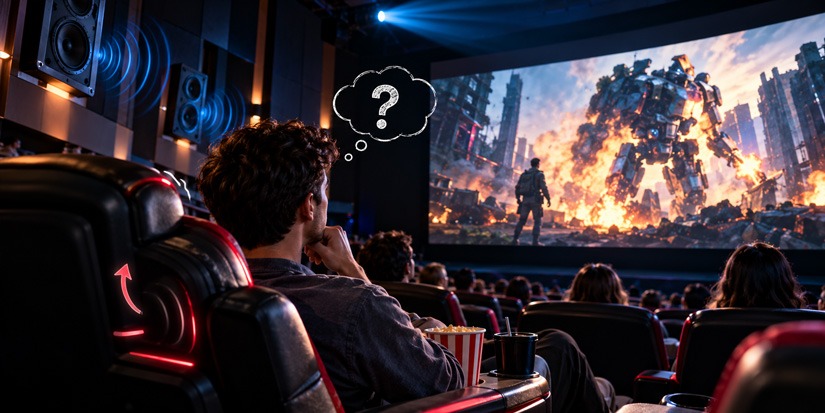
A spectacular sound system cannot fix a bad screenplay. A moving seat cannot create a better character. And the brightest laser projector in the world cannot make an audience care about a story they do not connect with.
Technology works best when it supports the story.
From a Few Seconds of Film to Entire Worlds
The transformation is remarkable.
The Lumière brothers were showing audiences simple scenes from everyday life. Georges Méliès soon demonstrated that film could also be used to create fantasy and visual illusions with A Trip to the Moon.
The screen has become bigger. The image has become sharper. The sound can now come from almost anywhere. The seats might even move underneath us.
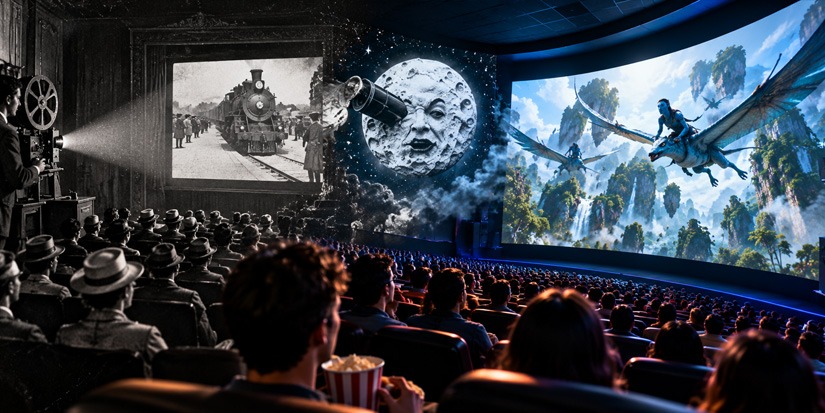
But cinema’s biggest advantage over watching a film alone at home has remained the same for more than a century: the shared experience.
Comedy feels funnier when an entire auditorium laughs together. Horror feels scarier when everyone goes silent at once. A major blockbuster feels bigger when shared with a crowd.
Technology might has changed the way we experience movies. It has not changed why we go to the cinema.